
Clinton County Arrest Warrants Explained
Indiana Title 35 sets the procedure. A complaint, affidavit, information, or indictment supplies the facts a judge reviews. A Clinton Circuit Court, Clinton Superior Court, or authorized lower-court judicial officer in Clinton County may then issue an arrest warrant once probable cause is met. What separates a warrant from a police request is that judicial finding. Frankfort City Court handles ordinance, infraction, and traffic matters, while more serious cases run through Circuit Court code 12C01 or Superior Court code 12D01. That code tells a caller which counter controls the order.
Probable Cause in Clinton County
Probable cause is a fact-backed reason to believe a crime occurred and that this person took part. The judge or magistrate weighs the sworn material before choosing a warrant or another lawful path. Indiana law allows a summons instead of immediate arrest in some cases. Skip the court date it sets, though, and a Clinton County judge can issue a warrant after the required finding.
Affidavit: Sworn facts offered in support of the charge or warrant request.
Indictment: A grand-jury charging instrument that may remain sealed until a court-authorized event.
Return: The serving officer's report back to the clerk after execution or another result.
Inside a Clinton County Arrest Warrant
The warrant may surface in an order or docket event, not on a separate public warrant card. So read the case as a story. A Clinton County warrant record can list the fields below, though sealed attachments and protected identifiers stay offline.
| Cause number | The court's uniform case identifier and court code; no separate countywide warrant-number format was documented. |
|---|---|
| Factual basis | A complaint, affidavit, information, or indictment supporting the accusation. |
| Charge | The alleged offense, Indiana statute, and case level where public. |
| Issuing authority | The court and judge or magistrate authorizing the order. |
| Service direction | The sheriff, Frankfort Police, or another authorized Indiana officer. |
| Bond and status | Any court-set bond or recognizance terms, plus issue, service, return, recall, or closure entries. |
Clinton County Issuance Roles
Agencies split the work. Circuit and Superior judges handle cases within their jurisdiction, and the Clinton County Clerk of the Circuit Court keeps the docket and receives the serving officer's return. The prosecutor presents criminal matters; the court makes the judicial decision. Frankfort City Court handles its own qualifying city cases. For abbreviations, review the state court-code source, the official Indiana court-code table that lays out each county's local structure.
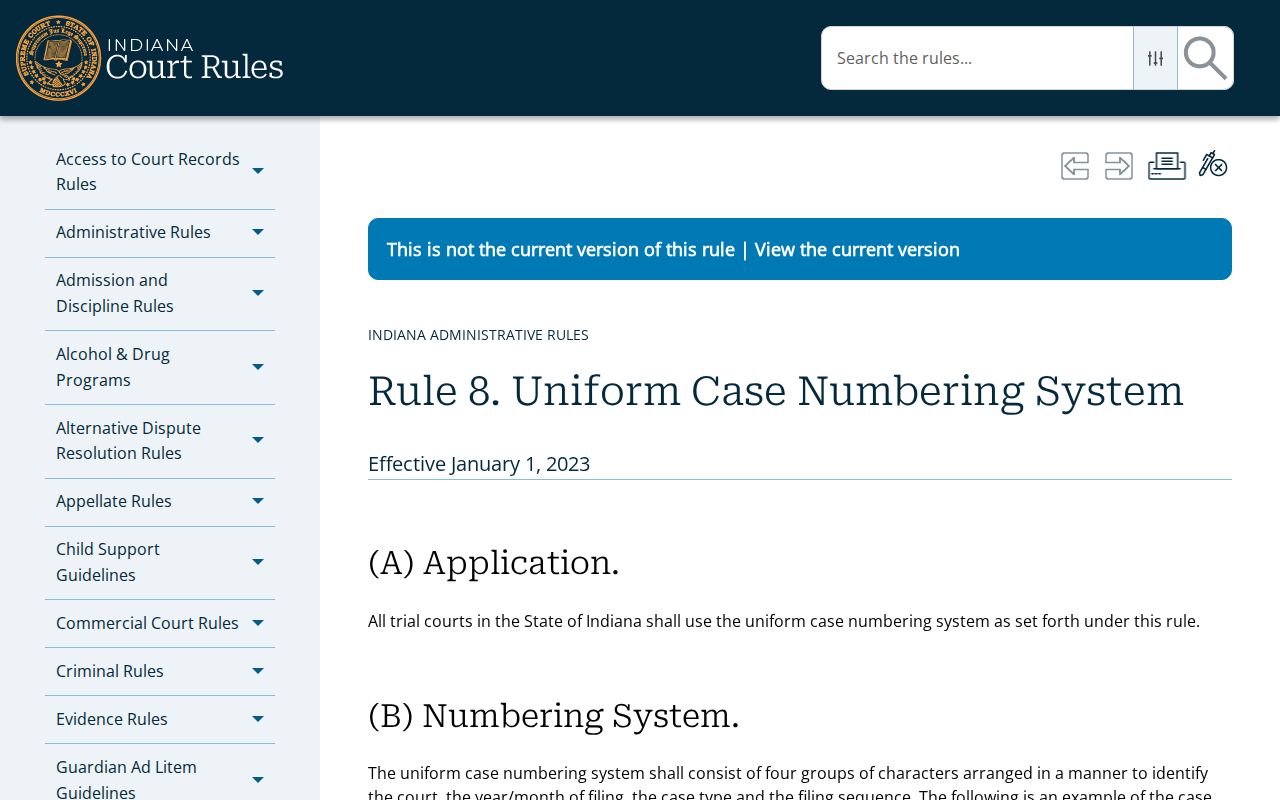
The table separates 12C01, 12D01, and Frankfort City Court code 12H01, which can route a Clinton County warrant question to different counters.
Serving Arrest Warrants in Clinton County
Once the clerk records the order, the warrant may go to the Clinton County Sheriff, Frankfort Police, a town marshal, or another authorized Indiana officer. Service can mean custody and booking, and the serving agency reports the return so the docket gets updated. Clinton County publishes no named warrant division, walk-in surrender form, or counter schedule. The state sheriff profile lists 765-654-5563, and the county directory lists 765-659-6393. Call and ask which line handles law-enforcement status and surrender logistics. Treat neither number as a dedicated warrant line until someone confirms it.
Clinton County Status Confirmation Route
Start with Indiana MyCase. Search the person's own public case by name, add a birth date if known, and apply the Clinton County court filter. Then read the docket for warrant, return, bond, recall, or hearing entries. MyCase is a case search, though, not a complete real-time warrant repository.
- Write down the exact cause number, court code, charge, and latest warrant-related entry.
- Call the Clerk at 765-659-6335, Circuit Court at 765-659-6345, or Superior Court at 765-659-6340 as the case requires.
- Ask whether the order is active, served, returned, recalled, quashed, or closed and request the entry date.
- Call the sheriff to confirm executable status and any court-approved surrender instructions.
- For a nonpublic record, send a focused APRA request to the agency that maintains it.
Comparing Arrest, Summons, and Bench Warrants
These processes can appear in one Clinton County case yet do different work. The docket's exact wording, not a broad label, controls how a person should respond.
| Process | Basis | Effect | First contact |
|---|---|---|---|
| Arrest warrant | Probable cause for an alleged offense | Authorizes custody | Issuing court, attorney, then sheriff |
| Summons | Charge handled without immediate custody | Commands appearance | Clerk or issuing court |
| Bench warrant | Missed appearance, contempt, or noncompliance | Authorizes arrest in an existing case | Issuing judge and clerk |
A summons can precede a warrant if the person skips court. A bench warrant can also arise later in a case that began with an arrest warrant. So a Clinton County docket may hold more than one process event.
Clinton County Arrest Warrant Bonds
Clinton County publishes no offense-by-offense bond schedule, warrant bond window, or accepted-payment list, so never guess an amount from a web result. The issuing judicial officer sets bond and release conditions; the clerk or jail explains where an authorized payment goes. Ask whether the case allows cash, surety, or personal-recognizance release, whether a judicial hold applies, and when the next hearing falls. Bond resolves the custody condition only. It does not dismiss the charge, end the case, or wipe out future court dates. Indiana clerk guidance says a bond or recognizance names the court, the amount, and the authorized official. Miss a court date afterward and the court can start forfeiture and issue another warrant. Ask where the bond must be posted, which payment forms are accepted, and when the sheriff receives release information. Annual jail fee totals say nothing about any person's bond or booking fee.
Local and Federal Arrest Warrants
A Clinton County MyCase search only reaches so far. It will not show a warrant from another Indiana county, another state, or a federal court. Clinton County sits in the Southern District of Indiana, and federal cases run through PACER or federal court channels. Sealed warrants never form a public self-check list. The U.S. Marshals district page does not publish local fugitive information either. So if identity or a transfer is the worry, talk with counsel and with the holding or issuing agency. The Clinton County Clerk cannot recall an order entered by some other jurisdiction. Skip third-party rosters that never name the originating court.
If There Is an Arrest Warrant for You
Found an active warrant with your name on it? Call a defense attorney and the issuing clerk before you show up at the jail. Hand counsel the cause number and the full docket. Ask in Clinton County whether the court allows an attorney-arranged appearance, a scheduled surrender, a walk-through, a motion to recall or quash, or a reset, and whether bond has been set. If surrender is required, confirm the reporting place, the identification requirements, the booking process, and the likely judicial-review sequence. Once the court acts, get confirmation from the clerk and check whether the sheriff has received the recall. Keep attending the underlying case. Clearing the warrant is not a dismissal, an acquittal, or an expungement.
Important: Speak with a lawyer before surrendering; Clinton County publishes no walk-in schedule, and an active warrant may result in immediate booking.